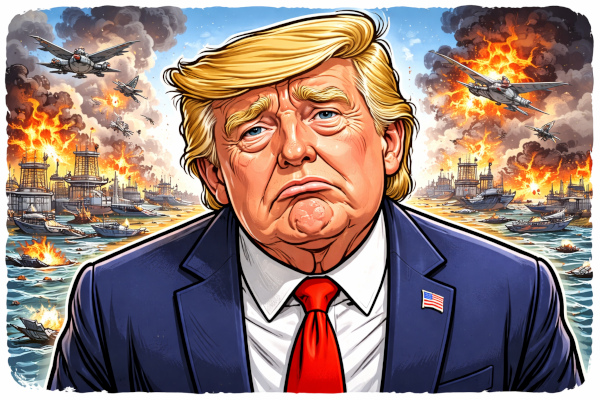
Donald Trump has now reached that rare stage of geopolitics where even allies sound less like allies and more like exhausted wedding guests watching the groom set fire to the cake. The Iran mess has produced a magnificent spectacle: Trump demanding backup, Europe staring back with the diplomatic expression of people who have just been asked to help a man move a piano after he already dropped it down the stairs. France, Italy and Spain all pushed back on military cooperation, while Trump responded with the energy of a man who starts a bar fight and then asks the neighboring table why nobody is helping with crowd control.
The comic centerpiece, of course, is Trump’s gift for presenting six positions before lunch and acting offended that nobody salutes the seventh. One day the war sounds like a grand strategic masterpiece, the next day America may leave “pretty quickly,” and then suddenly everybody else is supposed to go reopen the Strait of Hormuz like it is a blocked drain behind a supermarket. Macron’s complaint that you cannot keep contradicting yourself every day landed with the force of a man politely informing a dinner guest that he has been using the soup spoon to repair the chandelier.
Trump’s foreign-policy style increasingly resembles a casino magician who loses the rabbit, blames the audience, insults the carpet, and then announces that the trick was actually a tremendous success. He scolded Europe for failing to support the war, told countries reliant on Gulf energy to “get your own oil,” and kept talking as though the U.S. had merely rented out the apocalypse for a weekend and expected everyone else to handle the cleaning deposit. Europe, in response, behaved like tenants who had finally read the lease and discovered the landlord was billing them for his own plumbing disaster.
Then came the reported military brainstorming about somehow seizing Iran’s enriched uranium with commandos, engineers, excavation equipment, and even a makeshift runway. That plan sounded less like a sober military option and more like a child describing how to steal the moon: “First we land in enemy territory, then we dig up radioactive material, then we build an airport, and then everybody claps.” The Washington Post and AP described the idea as risky, massive, and wildly complex. Which, in Trump-adjacent English, is usually translated as: “What if Ocean’s Eleven had more bulldozers and less impulse control?”
This is where the allied mockery becomes almost art. Macron publicly said a military operation to reopen Hormuz was unrealistic, which is diplomatic French for, “Absolutely nobody serious signed off on this cartoon.” And in the more carnival end of the media ecosystem, retired French General Michel Yakovleff was quoted as saying “American officials should stop snorting cocaine between meetings.” NATO now sounds much like a group chat, trying to stop one friend from buying a jet ski during a divorce.
The greatest joke in all this is that Trump still talks like he got it all figured out. France is saying the plan is unrealistic. Britain is hosting talks that exclude the U.S. Italy and Spain have resisted military access. Even Reuters’ reporting on Trump’s own comments has him simultaneously threatening hell, dangling a deal, and hinting at an exit. It is the strategic equivalent of yelling “Charge!” while walking backward toward the parking lot.
So here is the savage truth of the matte. Trump approached the Iran crisis like a man entering a wedding reception on a jet ski, crashing into the cake, blaming the florist, threatening the band, and then demanding to know why the guests lack loyalty. Europe’s answer has been to step away from the splash zone. France called the military plan unrealistic. Spain shut the door. Italy started reading the rulebook aloud. Markets flinched, oil climbed, and Trump kept delivering ultimatums with the frantic majesty of a casino announcer discovering that the roulette wheel has rolled into traffic. If this is what “strength” looks like, then diplomacy may soon require a crash helmet and a designated adult.
You may also like
-
USS William D. Porter: The Warship That Treated Friendly Fire Like a Personality Trait
-
How to Lose a Battle Without the Enemy: The Karánsebes Method
-
Missiles, Mood Swings, and NATO’s Awkward Silence
-
The Empire vs. the Flying Toaster
-
F-35: The Flying Supercomputer That Occasionally Needs Psychiatric Support